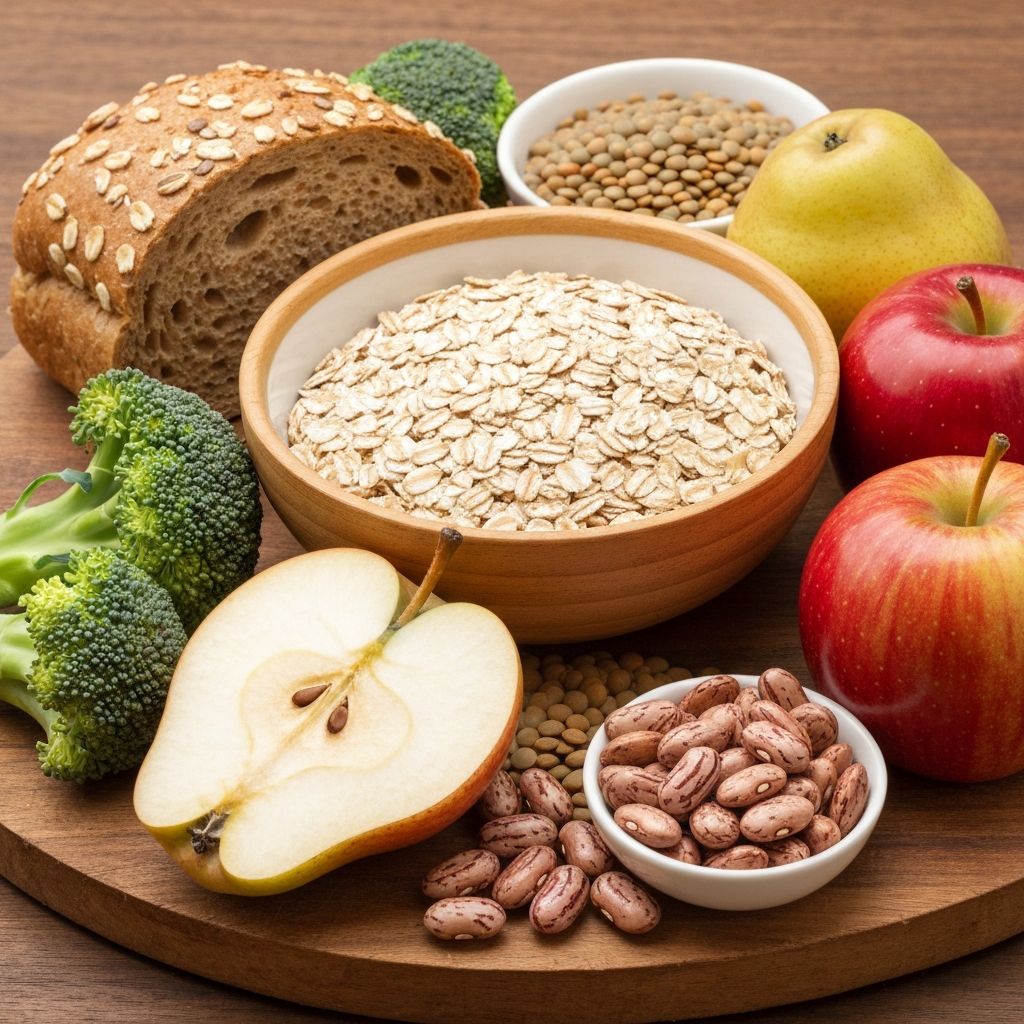
Fibre: Types, Sources and General Effects
Understanding dietary fiber and its role in nutrition and wellbeing
What Is Fibre?
Dietary fibre is a type of carbohydrate that your body cannot fully digest. Unlike other carbohydrates that break down into sugar, fibre passes through your digestive system largely intact.
Despite not being broken down for energy, fibre plays important roles in digestion, nutrition, and overall health.
Two Main Types of Fibre
Soluble Fibre
Soluble fibre dissolves in water, forming a gel-like substance in your digestive tract. This type of fibre:
- Slows digestion, helping you feel fuller longer
- Can help support stable blood sugar levels
- Supports healthy cholesterol levels
- Feeds beneficial gut bacteria
Food sources: Oats, barley, beans, lentils, apples, pears, berries, and carrots.
Insoluble Fibre
Insoluble fibre doesn't dissolve in water and passes through your digestive system largely unchanged. This type of fibre:
- Adds bulk to stool, supporting digestive regularity
- Promotes movement through the digestive tract
- Supports a healthy digestive environment
Food sources: Whole grains, wheat bran, nuts, seeds, and the skins of fruits and vegetables.
Natural Fibre Sources
Whole Grains
Whole grain bread, oats, brown rice, quinoa, and barley contain both soluble and insoluble fibre. The key is choosing whole grains rather than refined versions, which have fibre removed.
Legumes
Beans, lentils, and chickpeas are excellent fibre sources, providing both soluble and insoluble fibre alongside protein and minerals.
Fruits
Apples, pears, berries, and other fruits provide fibre, especially when eaten with skin. Dried fruits are concentrated fibre sources.
Vegetables
Broccoli, Brussels sprouts, carrots, leafy greens, and other vegetables provide various types of fibre. Eating vegetables with skin (where applicable) maximizes fibre content.
Nuts and Seeds
Almonds, flaxseeds, chia seeds, and other nuts and seeds provide fibre alongside healthy fats and minerals.
Effects of Fibre on Digestion
Digestive Regularity
Adequate fibre supports normal digestive function and regularity. Insufficient fibre can contribute to constipation.
Digestive Health
Fibre feeds beneficial bacteria in your gut, supporting a healthy gut microbiome. A diverse community of gut bacteria supports various aspects of health.
Satiety and Fullness
Fibre-rich foods take longer to chew and digest, contributing to feelings of fullness and satisfaction. This can influence how much you eat at meals.
Blood Sugar Stability
Soluble fibre slows the absorption of sugars, helping prevent rapid blood sugar spikes. This supports more stable energy throughout the day.
Fibre and Nutrient Absorption
Fibre affects how your body absorbs other nutrients:
- Fibre can affect absorption of some minerals
- Adequate fibre supports overall digestive health, which supports nutrient absorption
- Individual responses vary based on genetics, gut microbiome, and other factors
For most people eating adequate fibre from varied sources, nutrient absorption is well-supported.
Gradual Increase in Fibre
If you're increasing your fibre intake significantly:
- Increase gradually over weeks rather than suddenly
- This allows your digestive system to adjust
- Ensure adequate fluid intake alongside increased fibre
- Some people experience temporary gas or bloating during adjustment
Gradual increases allow beneficial gut bacteria to adjust to the increased fibre.
Individual Fibre Tolerance
How much fibre is comfortable varies between individuals:
- Genetics and gut microbiome influence fibre tolerance
- Some people thrive on high-fibre diets while others feel uncomfortable
- Certain digestive conditions may require attention to fibre types and amounts
- There's no universal "perfect" fibre intake
Fibre vs. Fibre Supplements
Whole food sources of fibre offer advantages over fibre supplements:
- Whole foods contain diverse types of fibre
- Whole foods provide additional nutrients alongside fibre
- Whole foods support satiety better than supplements alone
- Supplements can be useful for specific situations but don't replace whole foods
Practical Fibre Integration
Gradually incorporating fibre-rich foods into your diet:
- Add vegetables to meals
- Choose whole grains over refined grains
- Include legumes in soups, salads, or main dishes
- Snack on nuts, seeds, and fruits
- Include the skin on fruits and vegetables where applicable
- Ensure adequate fluid intake alongside fibre
Common Misconceptions
Myth: High Fibre Causes Weight Loss
Reality: Fibre supports satiety and stable digestion, but weight change depends on overall energy balance and individual factors.
Myth: Fibre Supplements Equal Whole Food Fibre
Reality: Whole food sources provide diverse fibre types, nutrients, and support satiety better than supplements alone.
Myth: More Fibre Is Always Better
Reality: Adequate fibre supports health, but extremely high intakes can cause digestive discomfort for some people.
Key Takeaway: Dietary fibre from diverse whole food sources supports digestive health, nutrient absorption, satiety, and blood sugar stability. Individual fibre tolerance varies, and gradual increases allow your digestive system to adapt.