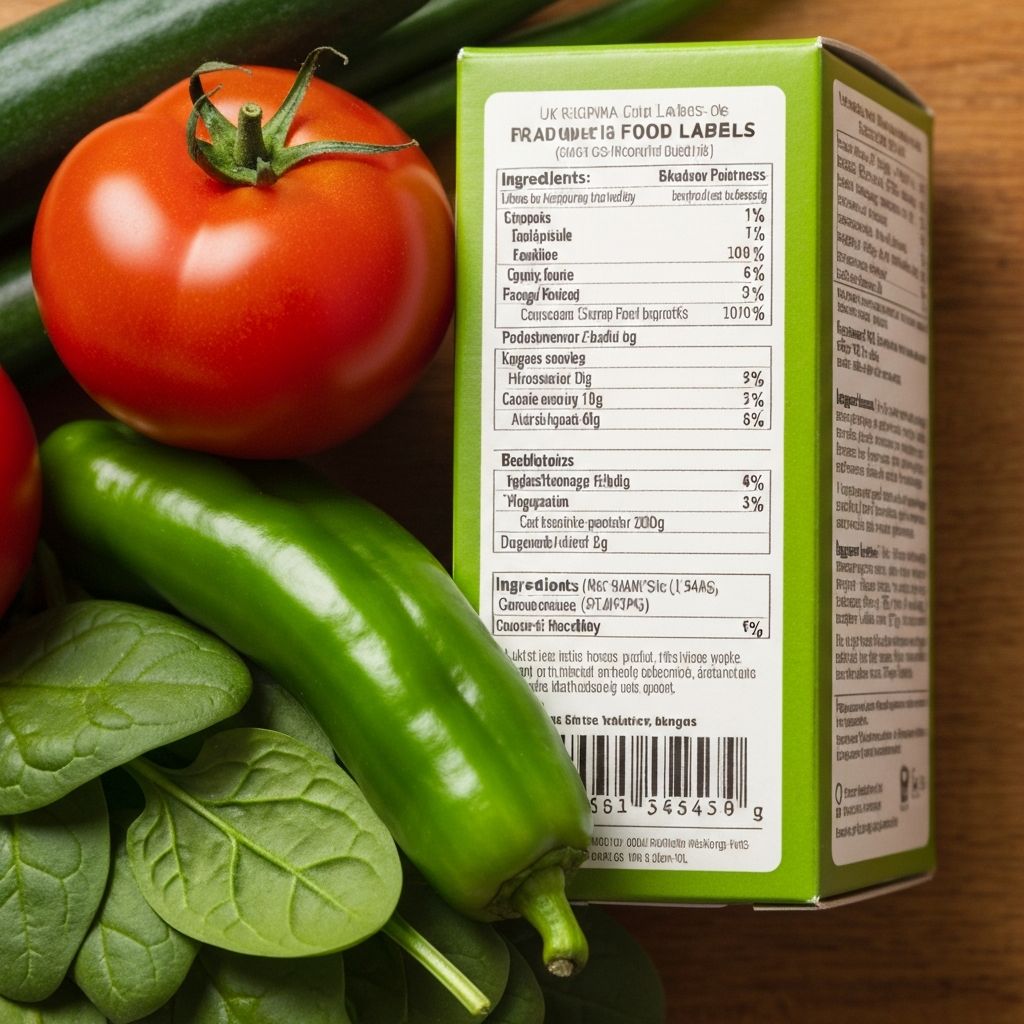
Understanding Food Labels in the UK: A Beginner's Guide
Learning to read and interpret mandatory UK nutrition labelling information
Why Food Labels Matter
Food labels provide standardized information about the nutritional content of packaged products. Understanding how to read them helps you make informed decisions about the foods you choose and understand their composition.
Front of Package Information
UK food labels typically display key information on the front of the package:
Traffic Light System (Optional)
Some manufacturers use a color-coded system showing whether a food is high, medium, or low in specific nutrients (fat, saturated fat, sugar, salt). This provides a quick visual reference, though it's optional.
Nutrition Information Box
This is the standardized section required on most packaged foods.
Reading the Nutrition Information Panel
The nutrition information box provides detailed nutritional data, typically showing information per 100 grams and per serving.
Energy (Calories)
Listed in kilocalories (kcal) or kilojoules (kJ). This tells you the energy content of the food. One serving might contain, for example, 150 kcal.
Fat
Total fat content is listed, with saturated fat shown separately. This helps you understand both total fat and the type of fat in the product.
Carbohydrates
Total carbohydrates are listed, with sugars shown separately. This helps you identify foods high in added sugars versus those containing complex carbohydrates.
Protein
The protein content helps you understand the food's protein contribution to your daily intake.
Salt
Listed in grams, often shown as equivalent sodium content. This helps you monitor salt intake.
Understanding Serving Sizes
Nutrition information is typically provided per 100 grams and per serving. Understanding serving sizes is important:
- Compare the serving size listed to how much you actually consume
- If you eat double the serving size, double the nutritional values
- Serving sizes can vary between similar products
Ingredient Lists
Below the nutrition information panel, you'll find the ingredient list:
- Ingredients are listed in descending order by weight
- The first ingredient is present in the largest quantity
- This helps you understand what the product is actually made from
- Look for familiar, recognizable ingredients versus highly processed additives
Allergen Information
Foods containing major allergens (nuts, shellfish, gluten, eggs, milk, soy, etc.) must be clearly labeled. This is crucial for people with allergies or intolerances.
Storage and Use Information
Labels include:
- Best Before: Indicates quality (not safety)
- Use By: Important for food safety
- Storage Instructions: How to keep the product properly
Practical Tips for Label Reading
When shopping or choosing foods:
- Compare nutrition panels of similar products to make informed choices
- Check serving sizes when comparing products
- Look at the ingredient list to understand what you're consuming
- Use labels to identify foods high in particular nutrients (sugar, salt, fiber)
- Pay attention to both nutrition information and ingredient quality
What Labels Don't Tell You
Food labels provide useful information but don't show:
- The overall quality of the food
- How the food was produced or sourced
- Processing methods
- How the food will affect your individual body
- Whether the food supports your personal health goals
Using Labels Effectively
Labels are tools for understanding food composition, not rules to follow. They help you make choices aligned with your preferences and eating patterns. Different people prioritize different things—some focus on sugar content, others on fiber, others on protein.
Key Takeaway: Food labels provide standardized nutrition and ingredient information. Learning to read them helps you understand what you're eating and make choices based on information rather than marketing claims.